Predicting Formula 1 Race Results
Participants: Darija Vasiljević, Marina Stojilković
Mentors:
Andrej Bantulić, engineer in electrical and computer engineering, School of Electrical Engineering, University of Belgrade
Milica Gojak, engineer in electrical and computer engineering, School of Electrical Engineering, University of Belgrade
Marija Nedeljković, University of Cambridge
Abstract
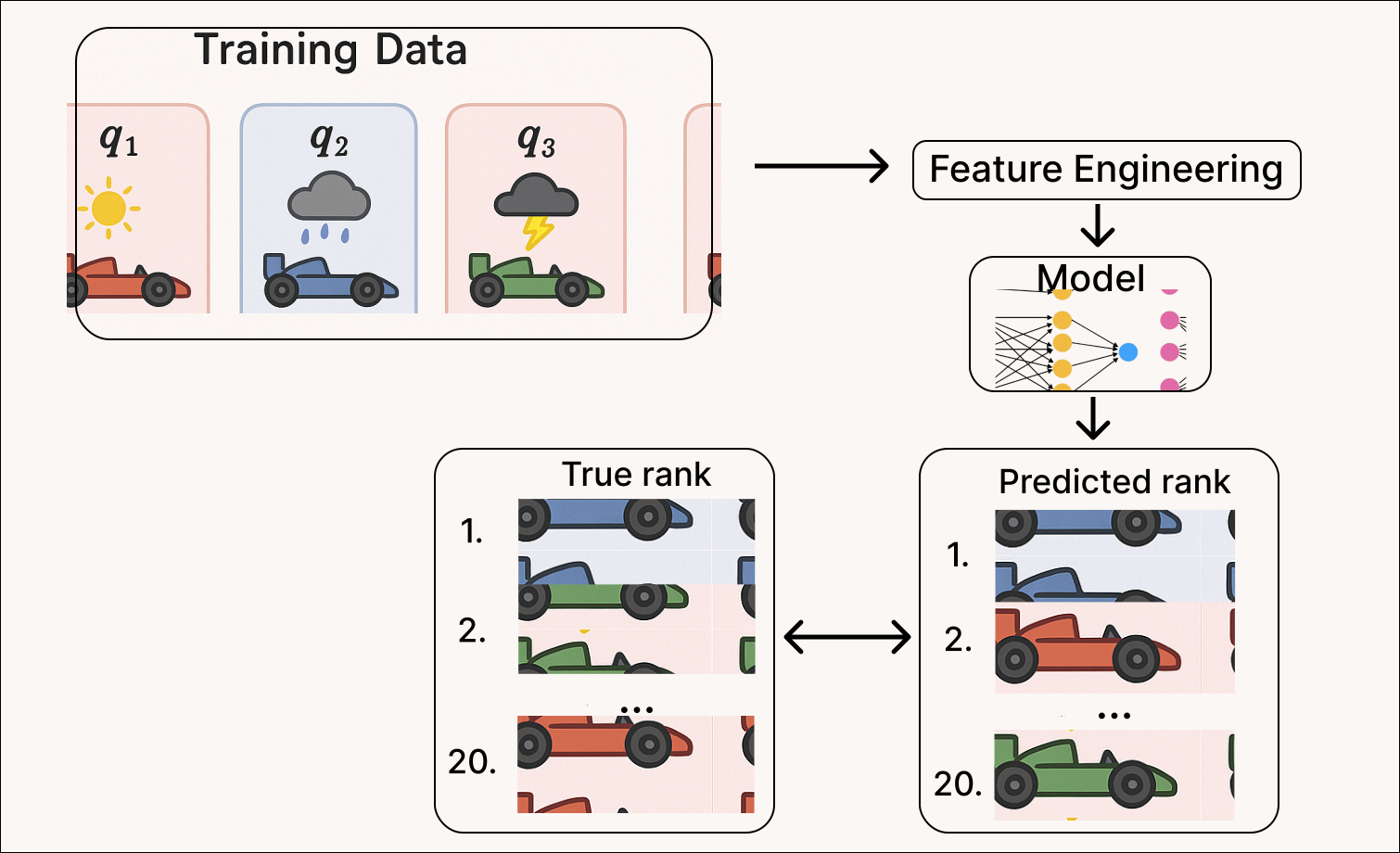
This paper presents a system for predicting the final standings of drivers in Formula 1 races using publicly available data from 2018 to 2024. The performance of statistical models (linear regression, Support Vector Machine, Naive Bayes) and modern machine learning algorithms (deep neural networks and XGBoost) was compared on a relatively small dataset. Two approaches were considered: listwise (predicting the entire ranking) and pairwise (predicting which driver in a pair will achieve a better position). Model evaluation shows that pairwise approaches, especially XGBoost trained on driver pairs, achieve the best performance: RMSE = 1.58, NDCG = 0.987, MRR = 0.89, Kendall’s $\tau$ = 0.86, and Spearman = 0.92, indicating accurate driver ranking and high precision in predicting race winners. The study demonstrates that combining feature engineering with modern models can significantly improve race outcome predictions in a dynamic sport like Formula 1.
Full paper
For the complete technical details, methodology, and results, please refer to the full paper in Serbian.