Sleep Stage Detection
Authors:
Lazar Denić, 2nd-year student at the Gymnasium in Raška
Andrej Odri, 3rd-year student at „Veljko Petrović” Gymnasium in Sombor
Mentors:
Milica Gojak, engineer in electrical and computer engineering, School of Electrical Engineering, University of Belgrade
Marija Nedeljković, University of Cambridge
Andrej Bantulić, engineer in electrical and computer engineering, School of Electrical Engineering, University of Belgrade
Abstract
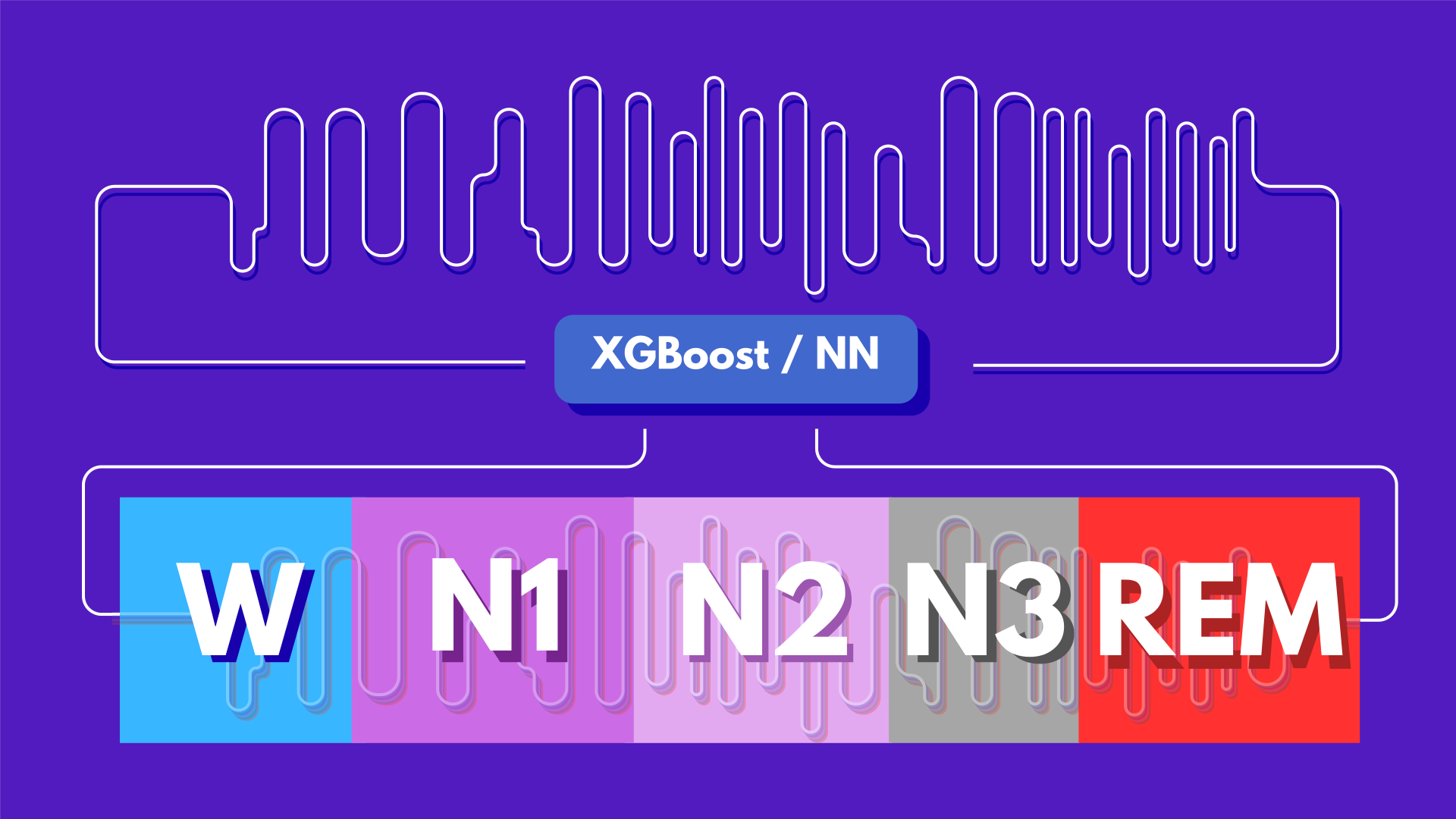
Good sleep is essential for health and normal human functioning. The analysis of sleep itself, that is, polysomnographic signals that carry all the necessary information for evaluating the stages, when performed manually, is time-consuming and subject to human error, which creates the need for automating this process. This paper focuses on the development, observation, and comparison of the performance of a neural network as a representative of deep learning, and an XGBoost model as a representative of tree-based classifiers. Training and testing were conducted on the DREAMT database, and the results showed that XGBoost performed slightly better than the neural network. However, each model has its own strengths and weaknesses and detects certain stages more accurately. Therefore, we believe that combining these two methods is the most optimal approach, and that further research should continue in this direction.
Full paper
For the complete technical details, methodology, and results, please refer to the full paper in Serbian.